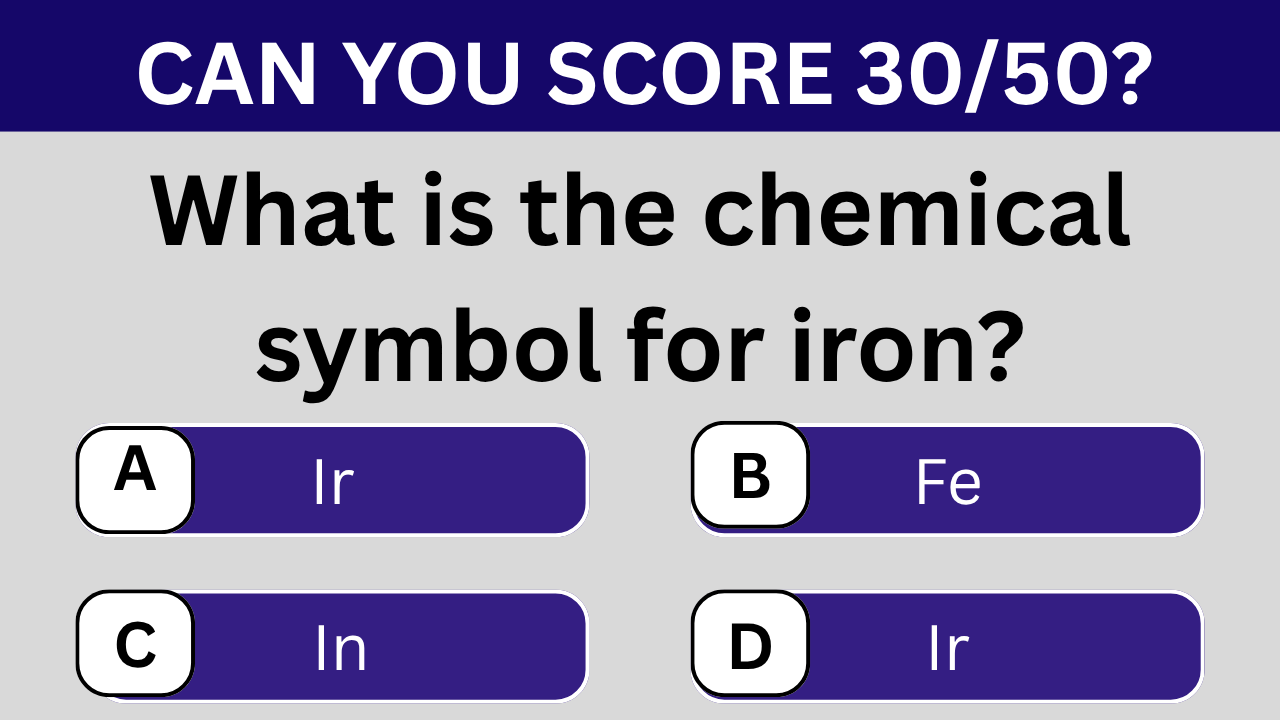
Master Biology, Chemistry, Physics, Earth Science & Astronomy – Aligned with U.S. Science Standards
This 50 Science Questions Quiz covers biology, chemistry, physics, earth science, astronomy, and general science — aligned with U.S. middle and high school standards. Each question includes four answer choices with the correct answer provided for self-checking.
Comment your score below after tallying your correct answers. Perfect for test prep, homework review, or classroom competitions. Share this quiz with classmates to challenge each other and reinforce key science concepts together.
| Click Here |
Top 50 Science Questions Quiz with Answers
Results


#1. Which gas is most abundant in Earth’s atmosphere?
#2. What is the name of the longest bone in the human body?
#3. Which planet is known as the “Ice Giant” due to its composition of water, ammonia, and methane ice?
#4. Which scientist is credited with discovering penicillin?
#5. Which scientist is known as the “Father of Modern Chemistry”?
#6. Which human sense is most directly linked to the olfactory bulb?
#7. What is the name of the part of the human brain responsible for vision?
#8. Which element has the atomic number 1?
#9. What is the name of the process by which bacteria convert nitrogen gas into ammonia?
#10. What is the chemical symbol for potassium?
#11. What is the pH scale range for an acid?
#12. Which human body system is responsible for producing hormones?
#13. Which human bone is the longest and strongest?
#14. What is the name of the smallest planet in our solar system?
#15. What is the name of the protein found in red blood cells that carries oxygen?
#16. Which animal has the largest heart of any living creature?
#17. What is the name of the force that pulls objects toward the center of the Earth?
#18. Which part of the plant conducts water from roots to leaves?
#19. Which type of rock is formed from cooled magma?
#20. What is the name of the layer of the atmosphere where weather occurs?
#21. Which vitamin is also known as ascorbic acid?
#22. Which metal is liquid at room temperature?
#23. Which organ in the human body produces insulin?
#24. Which scientist discovered the neutron?
#25. Which blood type is known as the universal donor?
#26. What is the name of the process by which a solid changes directly into a gas?
#27. What is the name of the phenomenon where light bends as it passes through different mediums?
#28. Which organ in the human body filters waste from the blood to produce urine?
#29. Which type of bond involves the sharing of electrons between atoms?
#30. What is the name of the hardest known natural material?
#31. Which planet has the shortest day in our solar system?
#32. What is the chemical symbol for iron?
#33. What is the name of the smallest unit of an element?
#34. What is the chemical formula for table salt?
#35. Which vitamin is produced naturally by the human body when exposed to sunlight?
#36. Which animal is known to sleep up to 22 hours a day?
#37. What is the hottest planet in our solar system?
#38. What is the name of the process by which plants release water vapor through their leaves?
#39. Which element is the primary component of diamonds and graphite?
#40. Which planet has the most moons in our solar system?
#41. What is the name of the galaxy closest to the Milky Way?
#42. What is the name of the Earth’s outermost layer?
#43. What is the name of the acid found in vinegar?
#44. Which part of the human eye controls the amount of light that enters?
#45. What is the name of the process by which cells divide to produce gametes?
#46. What is the chemical symbol for silver?
#47. What is the chemical formula for methane?
#48. What is the name of the first human-made satellite launched into space?
#49. What is the name of the largest internal organ in the human body?
#50. Which scientist proposed the three laws of planetary motion?
More Quizzes: