Human Body Quiz for Middle School Students | Science Quiz for Grade 7
This 7th Grade Human Body Science Quiz includes 20 middle school questions with clear, teacher-written explanations. Ideal for science practice, revision, and concept building.
Get daily quizzes, practice tests, and free learning updates.
Follow on FacebookHuman Body Science Revision Quiz Test | 20 Science Questions For Middle School Students
Results
Great work! You passed the quiz and showed a strong understanding of the human body. Keep practicing with more science quizzes to build confidence and improve your knowledge step by step.
More Quizzes – Click Here.
Don’t worry. Learning science takes time and practice. Review the explanations, try the quiz again, and keep learning. Regular practice will help you improve quickly.
More Quizzes – Click Here.


#1. Which system fights infections in the body?
Explanation: The immune system protects the body by fighting germs like bacteria and viruses.
#2. Which organ pumps blood throughout the body?
Explanation: The heart works like a powerful pump. It sends blood filled with oxygen and nutrients to all parts of the body so cells can function properly.
#3. What type of joint is found in the shoulder?
Explanation: The ball and socket joint allows movement in many directions, making the shoulder very flexible.
#4. What connects muscles to bones?
Explanation: Tendons attach muscles to bones and help move the skeleton when muscles contract.
#5. What is the job of the skeletal system?
Explanation: The skeletal system gives shape to the body, protects vital organs, and allows movement when working with muscles.
#6. Which system controls reflex actions?
Explanation: The nervous system sends fast signals between the brain, spinal cord, and body to control reactions and reflexes.
#7. What is the main function of the brain?
Explanation: The brain is the control center of the body. It manages thinking, movement, memory, emotions, and many automatic actions.
#8. What do red blood cells carry?
Explanation: Red blood cells carry oxygen from the lungs to all body cells using a protein called hemoglobin.
#9. Which nutrient helps build and repair muscles?
Explanation: Proteins are essential for muscle growth and repair, especially after physical activity or injury.
#10. What is the function of the small intestine?
Explanation: The small intestine absorbs nutrients from digested food and sends them into the bloodstream.
#11. Which system helps the body breathe?
Explanation: The respiratory system allows oxygen to enter the body and carbon dioxide to leave, helping cells produce energy.
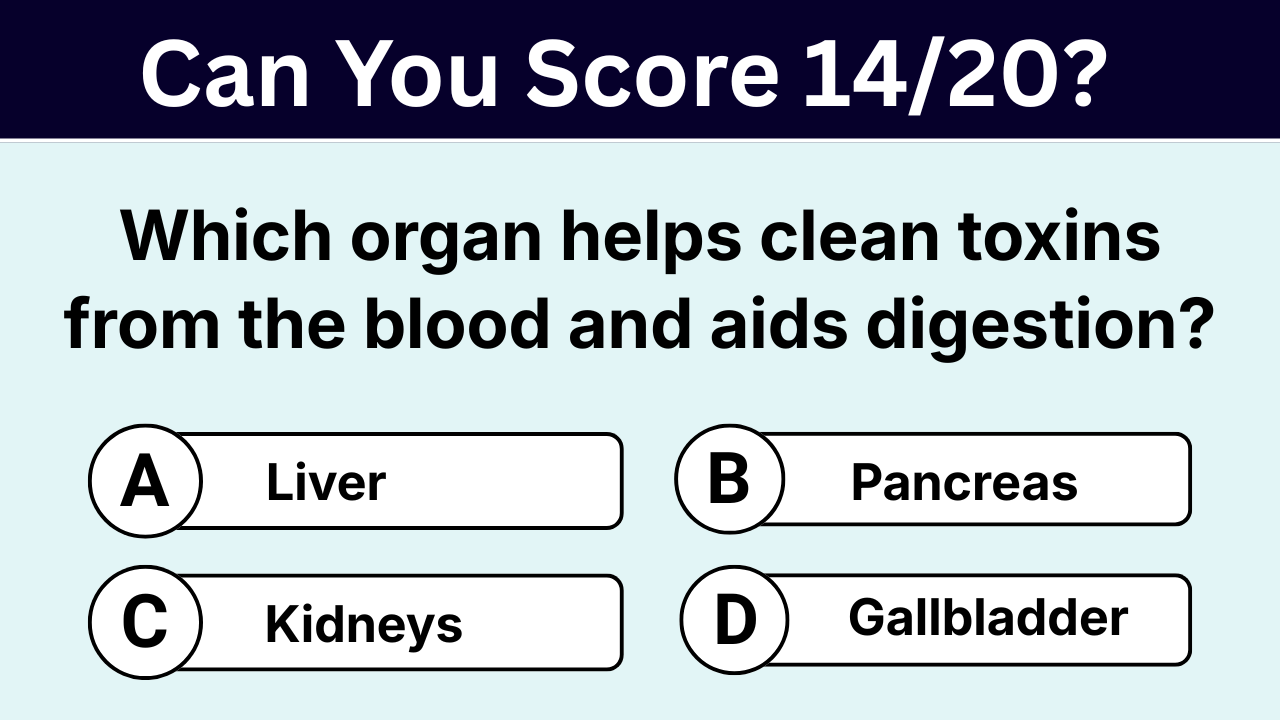
#12. Which organ helps clean toxins from the blood and aids digestion?
Explanation: The liver removes harmful substances from the blood and produces bile to help digest fats.
#13. Which part of the body protects the brain?
Explanation: The skull is a hard bone structure that surrounds and protects the brain from injury.
#14. What do lungs mainly exchange during breathing?
Explanation: Lungs take in oxygen needed by the body and remove carbon dioxide, which is a waste gas.
#15. Which part of the eye controls how much light enters?
Explanation: The pupil changes size to control the amount of light entering the eye, helping us see clearly.
#16. Which organ removes waste from the blood?
Explanation: Kidneys filter waste and extra water from the blood, producing urine to keep the body clean and balanced.
#17. What is the largest organ in the human body?
Explanation: Skin covers the entire body, protects against germs, helps control temperature, and allows us to feel touch.
#18. Which muscle works without conscious control?
Explanation: The heart muscle works automatically, beating nonstop to keep blood flowing without us thinking about it.
#19. Where does digestion begin?
Explanation: Digestion starts in the mouth where food is broken down by chewing and mixed with saliva.
#20. Why is calcium important for the body?
Explanation: Calcium strengthens bones and teeth and also helps muscles and nerves work properly.
More – Latest Quizzes for Grade 5-12